Mobile behaviour from the outset
The experience is shaped around one-handed use, short attention windows, notifications, device capabilities and the pace at which mobile decisions are made.
Nördia is a Swedish software engineering company working with businesses in the UAE on custom products, internal systems, integrations and digital operations. We support teams in Dubai, Abu Dhabi and across the UAE remotely, with the project structured around the business process, data and operational responsibility rather than a pre-set package.
From product definition and architecture through delivery and managed operation, Nördia takes responsibility for the system as a whole — including what happens after launch.
Project financing is available for qualifying engagements, with agreed managed terms of up to 36 months.
Swedish engineering, informed by international delivery
One engineering responsibility from product decision through to operation
We do not stop at the interface and leave integration, infrastructure, security and recovery to become somebody else's problem. We treat the experience, business logic, data, integrations and operating environment as parts of the same product.
Deployment, monitoring, backup, recovery and security are considered early enough to shape the architecture, rather than being added only after growth exposes the gaps.
Language, currency, payments, fulfilment and market-specific behaviour can be built into the product model from the start instead of added later as a translation layer.
Every screen depends on rules, permissions, data, integrations and system state. We engineer those foundations so the interface reflects what the business needs to happen.
Orders, payments, permissions, approvals, notifications, integrations and failure states determine whether the product works once customers and staff depend on it.
Nördia can remain responsible from the customer-facing experience through to the services, data and infrastructure that keep the operation running.
SaaS, applications, business systems and digital commerce shaped around the operating model instead of forcing the organisation into a generic workflow.
Payments, customer data, accounting, fulfilment, CRM, ERP and external services connected so information moves deliberately rather than being copied by hand.
Release, monitoring, security, backups, performance and product evolution continue after launch where the system warrants an ongoing operating responsibility.
We begin with how the organisation works, where information moves and where decisions are made, then design the software around that reality.
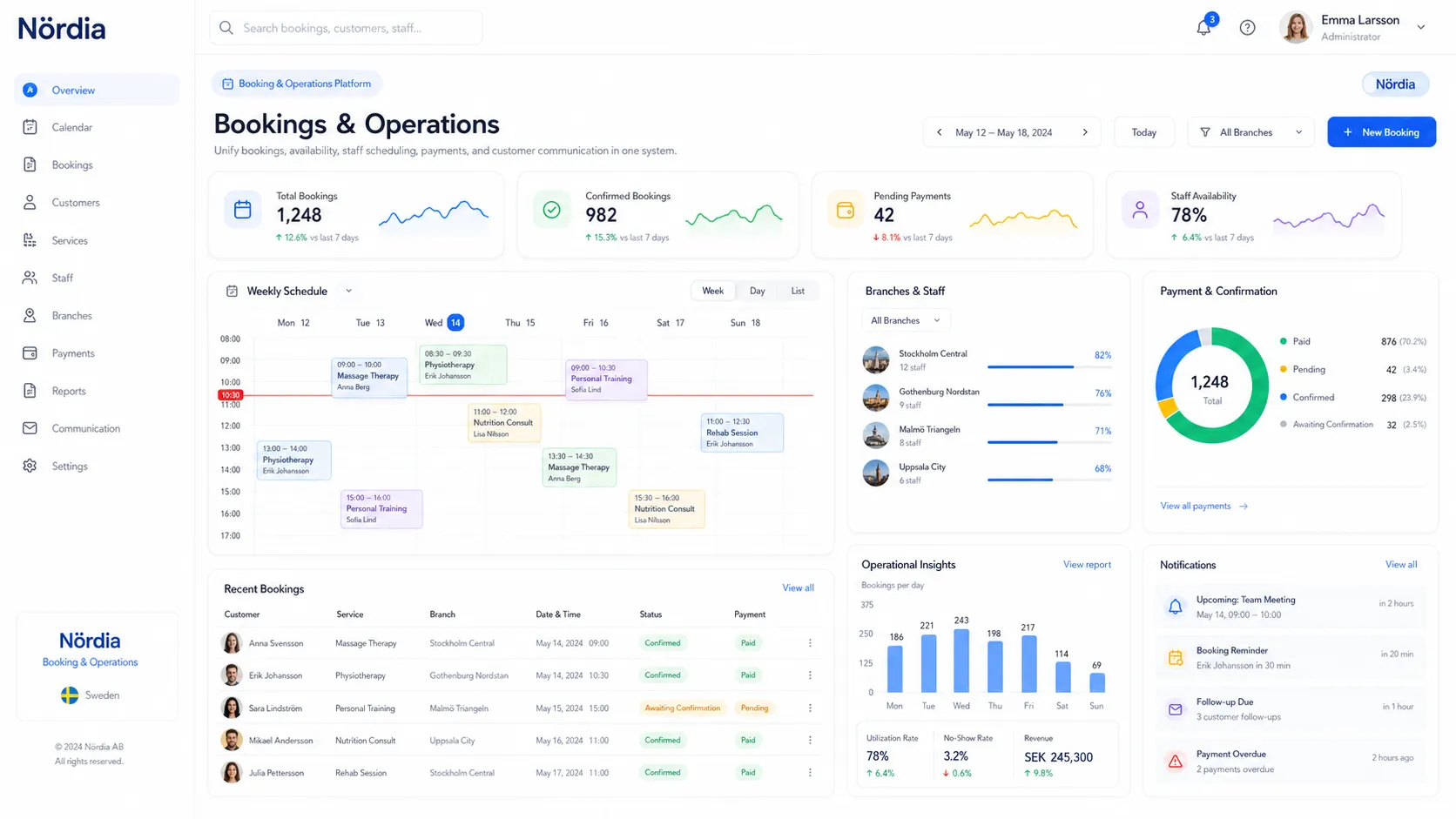
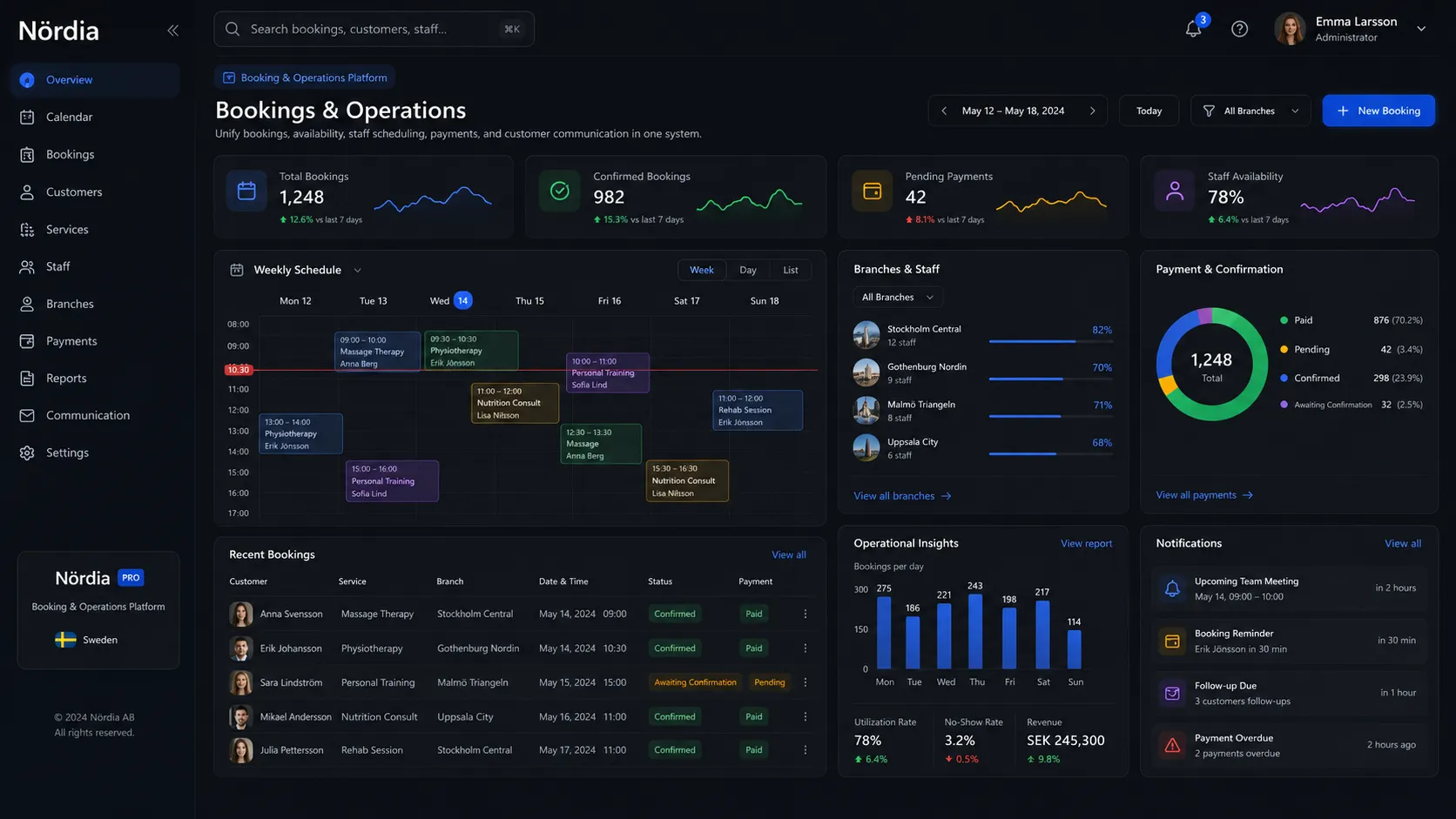
Bookings become operationally useful when availability, locations, staff, payments, notifications and administration share the same state. We connect the customer journey to the work that follows it.
Modern tools can produce a convincing interface remarkably quickly.
The real product begins when identities, money, permissions, changing data, external services and recovery requirements enter the system.
We use AI to increase engineering capacity where it is useful, but we do not outsource architectural judgement or operational responsibility to a model.
Security boundaries, data ownership, deterministic business rules, failure handling and verification remain clear engineering concerns.
Where AI is part of the product itself, we integrate it for tasks such as company-knowledge search, document interpretation, classification, assisted decision-making and controlled automation — with permissions and consequential actions kept governable.
Nördia AI
Inside day-to-day operations
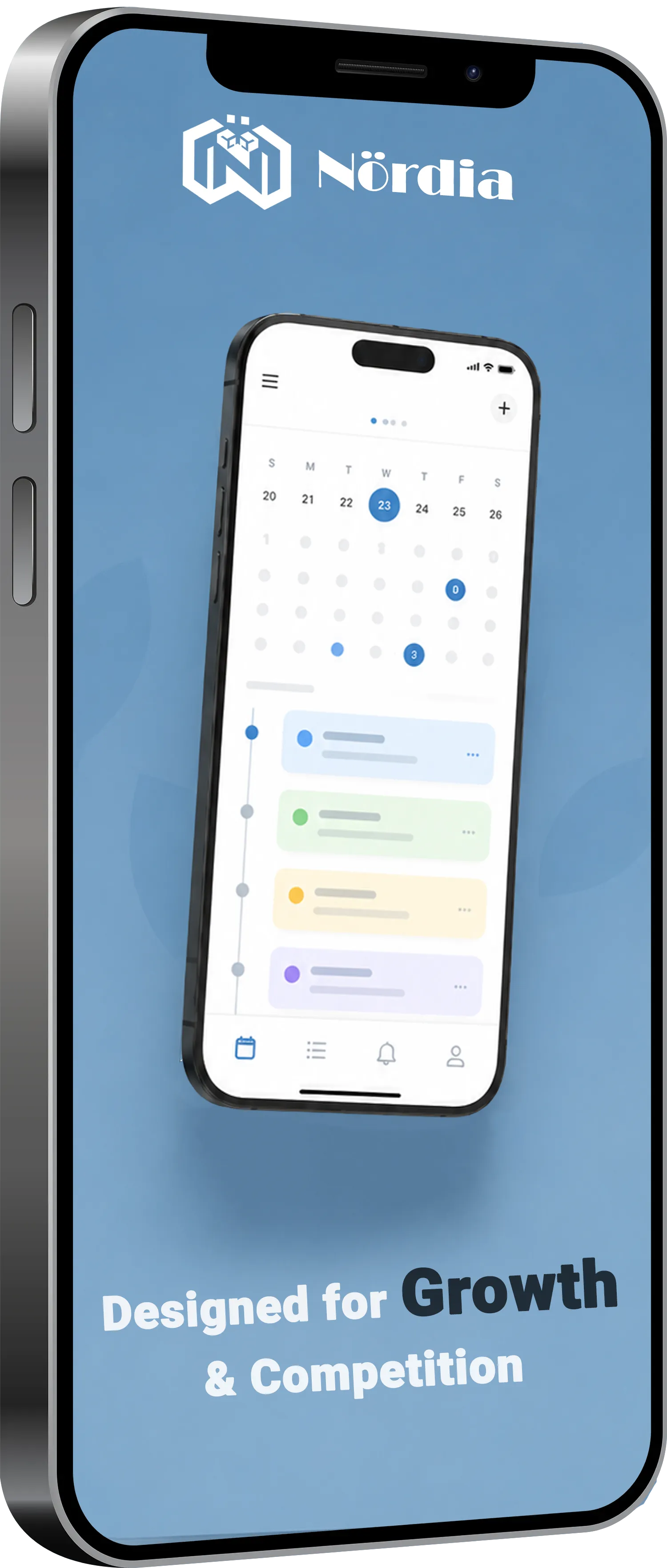
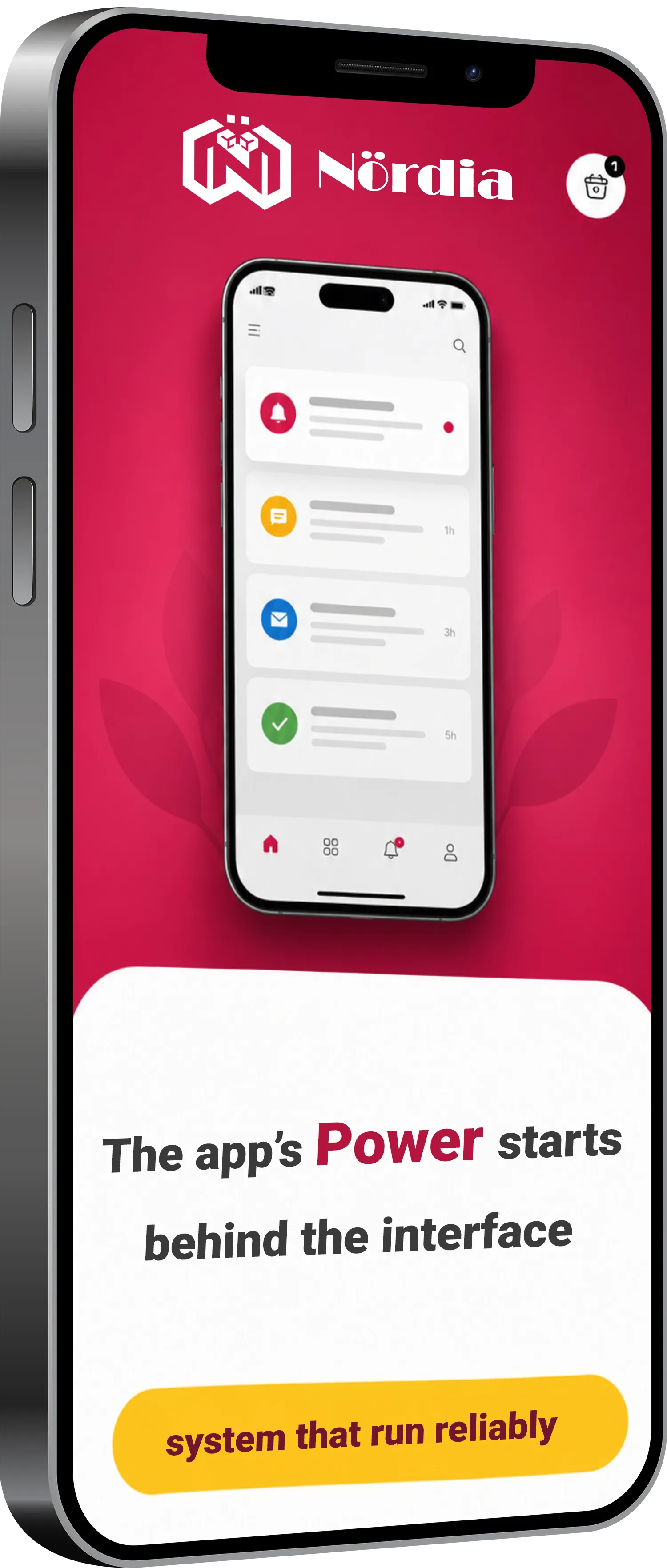
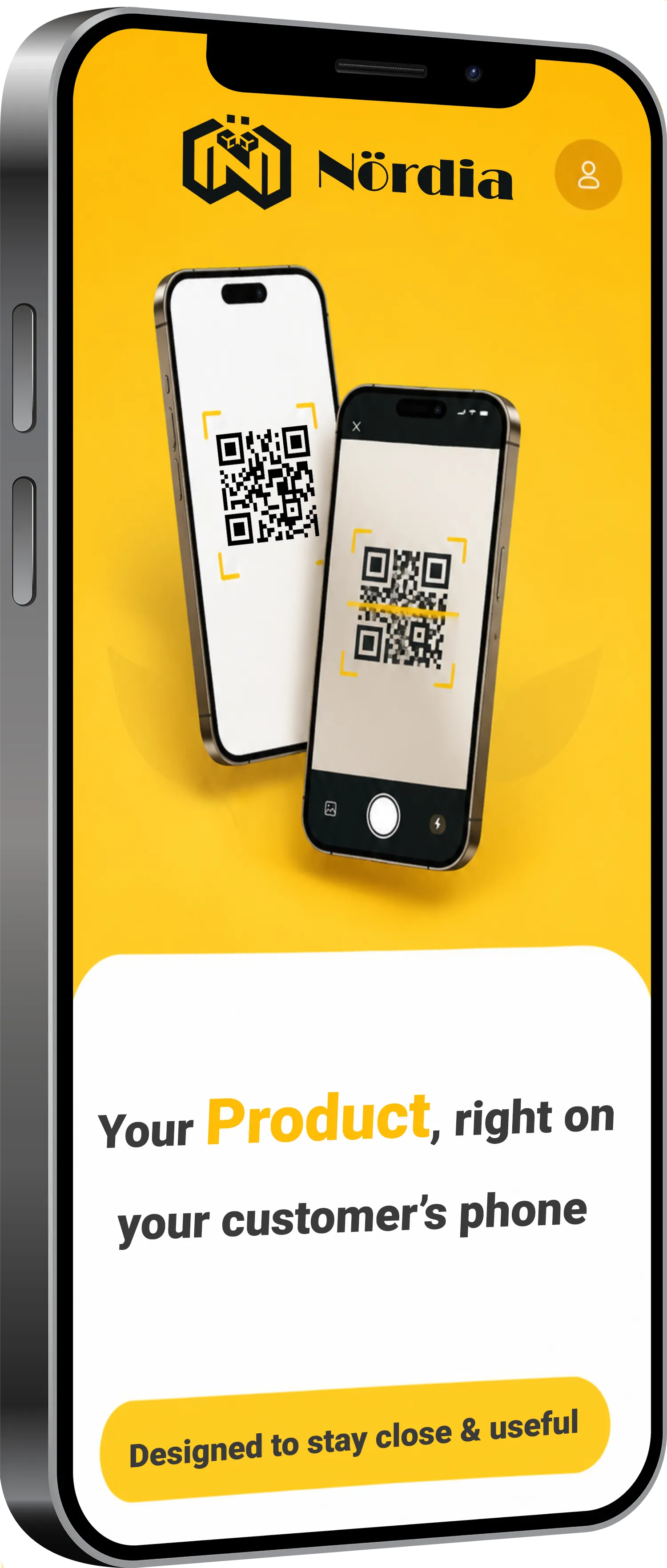
iPhone and Android are not smaller website canvases. The mobile experience has to account for device state, accounts, payments, notifications, camera, connectivity and the operational system behind the application.
The experience is shaped around one-handed use, short attention windows, notifications, device capabilities and the pace at which mobile decisions are made.
Accounts, orders, payments, content, data and administration remain connected to the same controlled backend rather than creating an isolated mobile version of the business.
Where the product requires a true mobile application, we build one with defined state, operating logic and a foundation that can evolve — not a WebView presented as native software.
Turn the service into a mobile product customers can rely on
Discuss your applicationAvailability, performance, security, updates, backups and recovery are operating disciplines. Where Nördia manages the product, they are treated as part of running the system rather than tasks reserved for the day something breaks.
Encrypted on-premises copy · Off-site copy · Verification
Evidence that copies exist and restoration works
READY
Restoration path
The recovery model is determined by system criticality, data volume and the organisation's continuity requirements.
Where continuity requirements justify another layer, selected managed-operation arrangements can include an encrypted recovery server located at the company's premises and maintained alongside off-site copies. Availability depends on the system, data volume, continuity requirements and the agreed operating model.
Where continuity requirements justify another layer, an encrypted recovery copy can remain on the organisation's premises.
The on-premises layer complements independent off-site backups; it does not replace them.
Nördia can monitor, maintain and verify the layer according to the agreed continuity model and data volume.
We adapt language, commercial conventions, currency, payments, fulfilment and product behaviour so the experience feels built for the market rather than translated into it.
From your market to the next market, the product should feel deliberately designed for the people using it
Translation changes the words. Localisation changes how easily people understand the product, trust it and use it.
We build for web, iPhone, Android, Windows, macOS and cloud environments, selecting technology according to product behaviour, security, team capability, integration requirements and long-term operating cost.
Repeated data entry, manual reconciliation and information copied between platforms create cost, delay and avoidable errors. We connect the systems so information moves with clear ownership, validation and traceability.
Product and technical decisions stay with the people responsible for implementation, instead of passing through layers that separate context from execution.
Work, evidence and release decisions are organised so material changes remain traceable and can be checked against the intended outcome.
A screen looking correct is not proof that the system behaves correctly. We verify the behaviours, contracts and affected processes appropriate to the risk of the change.
Defined by the delivery scope, early engineering cost, external dependencies and the point the product must reach before any structured portion becomes appropriate.
In selected engagements, a proportion of the project value may be distributed across the agreed term. Some structures may fall within a 30–60% range; this is assessed case by case.
Where appropriate, the commercial structure can extend to 36 months alongside an agreed scope for managed operation and continued technical responsibility.
For qualifying companies and engagements, Nördia may combine an initial commitment with a structured portion of the remaining project investment over a managed technology term of up to 36 months where agreed.
Illustrative financing structure
Flexible project structuring of up to 36 months, where appropriate
We give your business local numbers in the markets you serve and route calls to the right person in the office, on mobile or on desktop — through one system managed by Nördia.
Your customer calls a familiar number and the call reaches the right department or person wherever they are. We configure numbers, routing, business hours and queues before handover.
Give customers a familiar local number instead of asking them to call an international line.
A preconfigured business phone: connect it to the internet and it is ready to receive calls.
Route sales, support, branches and individual staff through one managed communications setup.
Open the customer record, log the follow-up and create a sales opportunity or support ticket from the same call.
Calls and customer data are protected through encryption, precise access controls, tenant isolation and clear audit records.
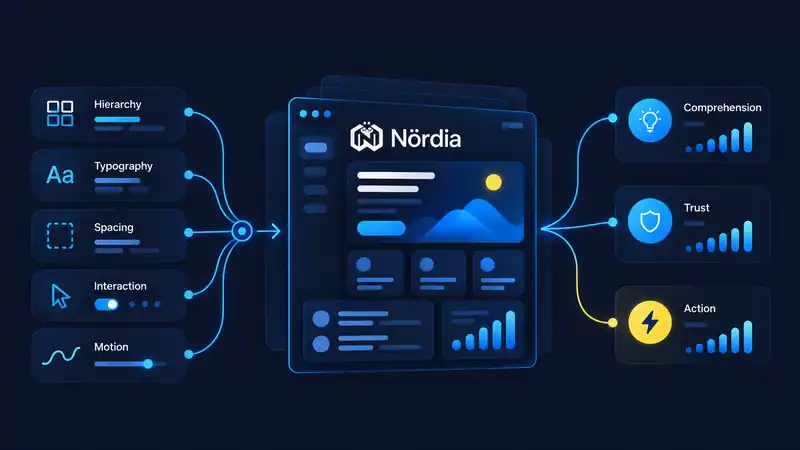
A customer begins forming a judgement before speaking to anybody in the company. Can they understand the proposition? Does the interface create confidence? Is the next decision obvious without explanation?
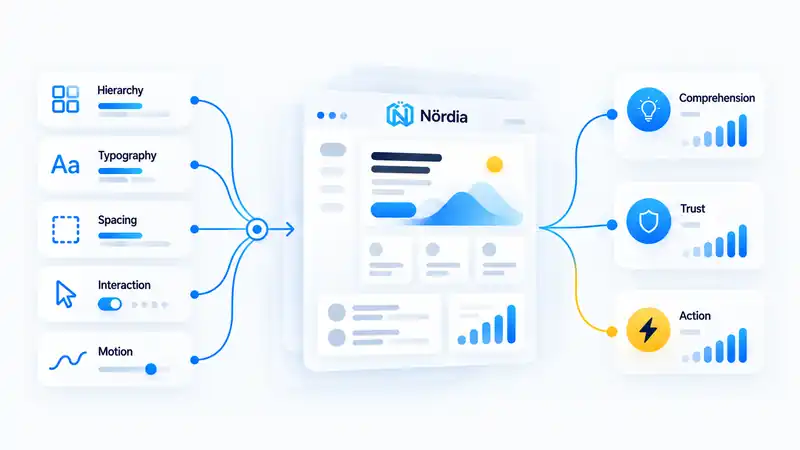
That is why we do not treat design as decoration applied after engineering. Information hierarchy, typography, spacing, interaction and motion influence how the company is understood and how easily a customer can act.
The same principle applies to this website: visual decisions are expected to support comprehension, trust or action instead of serve as decoration.
Good design does not simply make a company look more polished. It reduces uncertainty around the decision to engage with it.
Scope, ownership, security, commercial terms and post-launch responsibility are easier to manage when they are explicit from the outset.
Tell us what the organisation is trying to achieve, how the process works today and where the current setup creates delay, risk or unnecessary manual work. The right answer may be a focused integration, a purpose-built system or a broader digital product.